

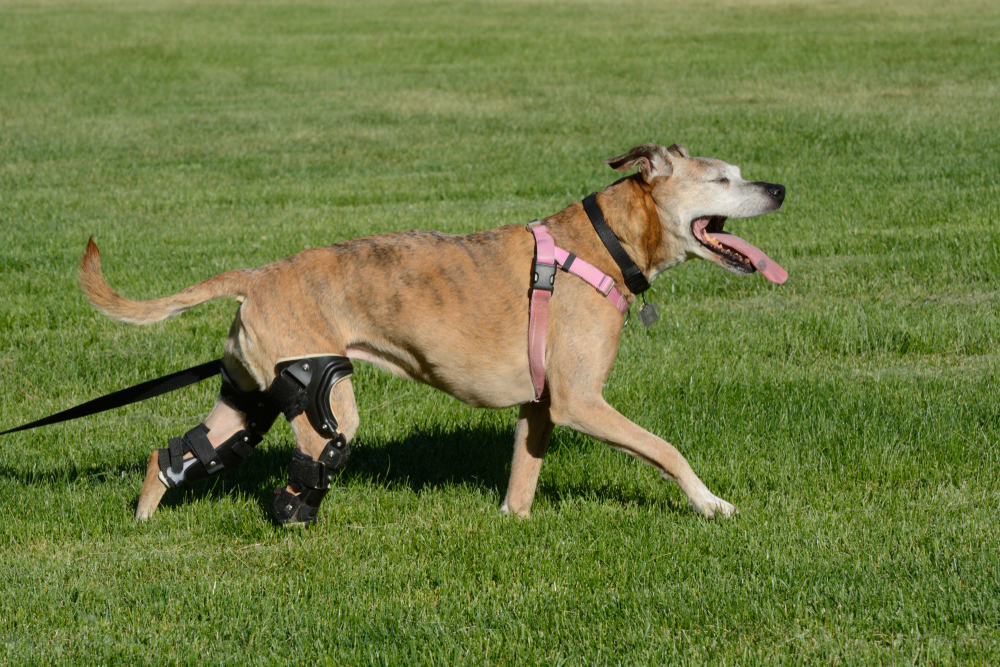
A torn cranial cruciate ligament (CCL) is one of the most common orthopedic injuries in dogs, but it rarely happens because of one dramatic misstep. In most cases, the ligament slowly weakens over months until the knee finally becomes unstable, leaving a dog limping on a back leg. The good news is that a torn CCL is highly treatable, and there is more than one way to manage it. Depending on your dog’s size, age, activity level, and the structure of the knee, the best plan may involve conservative management and rehabilitation or surgery, such as a TPLO, which reshapes the shin bone, or an extracapsular repair, which stabilizes the joint with a strong suture. Starting pain control and reaching an accurate diagnosis early helps slow arthritis while you and your veterinary team decide which approach is the best fit.
When a dog comes to The Animal Medical Hospital of Naples with a painful back leg, we take the time to perform a thorough orthopedic examination before recommending treatment. Using joint-focused diagnostics, including digital X-rays and in-house lab work, we determine exactly what’s happening inside the knee so we can build the right plan from the start. Comfort comes first, so laser therapy and an individualized pain management plan often begin on the first visit. From there, we’ll discuss whether conservative care or surgery offers the best long-term outcome, and if platelet rich plasma (PRP) therapy is an option. If surgery is recommended, we’ll explain the options and remain involved throughout your dog’s recovery. If your dog has started limping or won’t bear weight on a back leg, schedule an appointment with our Naples team so we can evaluate the knee before more damage occurs.
What You Need to Know Up Front
- A torn CCL is the canine equivalent of a human ACL tear, but it usually develops gradually as the ligament degenerates rather than from one sudden injury.
- Once the ligament tears, the knee remains unstable. In most dogs, it will not heal with rest alone.
- Treatment ranges from conservative management and rehabilitation to surgery. When surgery is the best option, a TPLO or an extracapsular repair is chosen based on your dog’s size, activity level, and knee anatomy, and we’ll refer you to a trusted surgical partner.
- Dogs that tear one CCL have a significantly higher risk of tearing the ligament in the opposite knee, making weight management and long-term monitoring especially important.
Why Do Dogs Tear Their CCL in the First Place?
Most CCL tears don’t happen because of one awkward jump or bad landing. In dogs, the ligament usually weakens gradually over months or even years before finally giving way. A cranial cruciate ligament injury is the canine equivalent of a human ACL tear, but unlike people, dogs are far more likely to develop it through progressive degeneration than a single traumatic event.
The cranial cruciate ligament prevents the tibia from sliding forward as your dog bears weight. Once it begins to fail, the knee becomes unstable, painful, and increasingly prone to arthritis. Several factors make that process more likely:
- Knee anatomy: A steeper tibial plateau angle places more stress on the ligament with every step.
- Breed and body type: Labrador Retrievers, Rottweilers, Newfoundlands, and many other large breeds have a higher risk, although small dogs can certainly develop CCL tears as well.
- Body weight: Every extra pound increases the forces passing through the knee.
- Activity pattern: Dogs that spend most of the week inactive but engage in intense bursts of exercise on weekends are especially prone to injury.
One important thing to understand is that a torn CCL is often not an isolated problem. Dogs that rupture one ligament have a much higher risk of tearing the CCL in the opposite knee, often within the next year or two. Maintaining a healthy body weight and muscle strength through personalized nutrition and activity plans is one of the best ways to reduce stress on that second knee.
What Are the Signs of a Torn CCL?
The hallmark sign of a torn CCL is hind-leg lameness. With a complete tear, the limp often appears suddenly. Partial tears can be much more subtle, improving after a few days of rest only to flare up again after exercise. That stop-and-start pattern is one of the reasons partial tears are often mistaken for a simple strain.
Intermittent or worsening limping should always be taken seriously, even if your dog still bears some weight on the leg. Other common signs include:
- Difficulty with everyday activities: Hesitating on stairs, struggling to jump into the car, or taking longer to stand after resting.
- An abnormal sit: Many dogs sit with the injured leg extended to the side instead of tucked neatly underneath them.
- Swelling around the knee: Firm thickening along the inside of the joint often develops as inflammation and scar tissue build.
- Stiffness after activity: Your dog may seem comfortable during a short walk but become noticeably sore afterward or the following morning.
You don’t have to wait until your dog is carrying the leg completely. Evaluating a partial tear early gives us a better opportunity to control pain, slow arthritis, and discuss treatment options before the knee deteriorates further.
Confirming the Tear: What the Exam and Imaging Reveal
Diagnosing a torn CCL starts with a thorough orthopedic examination. We’ll watch your dog walk, feel the knee for swelling and instability, and perform specific tests that help determine whether the ligament has been damaged. In many dogs, especially those that are tense or painful, sedation allows us to examine the joint more accurately and comfortably.
Here’s what the evaluation typically includes:
- Orthopedic examination: We assess your dog’s gait and check the knee for swelling, thickening, pain, and instability.
- Cranial drawer and tibial thrust tests: These hands-on maneuvers detect the abnormal forward movement that occurs when the CCL has torn.
- Diagnostic imaging: X-rays help confirm the diagnosis, evaluate arthritis, and guide treatment recommendations.
Although X-rays cannot show the torn ligament itself, they’re an important part of the workup. They reveal joint swelling, arthritic changes, and the shape of the tibia, all of which help us determine the extent of the injury and, if surgery is needed, which procedure may be the best choice. In more complex cases, MRI can provide additional information about the ligament, meniscus, and other soft tissues. For most dogs, however, a careful orthopedic exam combined with high-quality X-rays provides all the information needed to make a diagnosis and build a treatment plan.
Does Every Torn CCL Need Surgery?
Not necessarily. Conservative management uses strict activity restriction, pain medication, weight management, and rehabilitation to help stabilize the knee with scar tissue rather than surgery. It can be a reasonable option for some dogs, but it isn’t the right choice for every patient.
Body size is one of the biggest factors. Small dogs often do surprisingly well without surgery because their knees experience much lower forces during everyday activity. Medium, large, and giant breeds, however, generally have better long-term comfort and function with surgical stabilization. Your dog’s age, activity level, overall health, and the severity of the tear all play an important role as well.
There’s no one-size-fits-all recommendation. Our job is to help you understand the benefits and limitations of each option so you can make the decision that’s best for your dog, your family, and your goals for recovery.
What Happens If a Torn CCL Is Left Untreated?
A torn CCL doesn’t heal on its own, and the knee won’t become stable again without treatment. Because the ligament cannot reattach, every step places abnormal stress on the joint. What begins as a limp gradually becomes a more painful, arthritic knee that’s increasingly difficult to manage.
Over time, that instability accelerates arthritis, thickens the joint capsule, and increases the risk of a meniscal tear. The meniscus acts as a cushion between the bones, and once an unstable knee pinches it, dogs often develop a sharp, painful limp or clicking sensation that typically requires surgery to correct. Dogs also compensate by shifting their weight to the other three legs, causing muscle loss in the injured limb while placing additional strain on the opposite knee.
This isn’t meant to be alarming. It’s simply why an early diagnosis matters. The sooner we examine the knee, the more options we have to control pain, protect the joint, and slow the progression of arthritis.
Can Laser Therapy or PRP Help My Dog’s CCL Injury?
Both can, though they work on different parts of the problem, and neither one replaces surgical repair in a dog who needs it.
Laser therapy targets inflammation and pain in the joint itself, which is why it earns a place both while a dog waits for surgery and through the weeks of rehab afterward, easing soreness without putting another pill on board.
Platelet-rich plasma works differently: platelets concentrated from your dog’s own blood are injected into the joint, where they release growth factors that calm inflammation and support the surrounding soft tissue. PRP appears to offer the greatest benefit for partial tears and arthritis associated with CCL disease. When surgery is needed, it is typically used alongside the procedure rather than instead of it.
For a dog who is not a surgical candidate because of age or another health problem, layering these into a pain control plan can buy real comfort and function. For a dog who does have surgery, these therapies can speed healing and decrease pain. We offer both laser therapy and PRP at The Animal Medical Hospital of Naples, and which combination and when they are used will be an individual decision for each dog.
Understanding Your Surgical Options
If surgery is the best choice for your dog, the two most common procedures are TPLO and extracapsular repair. Both stabilize the knee, relieve pain, and slow the progression of arthritis, but they do so in different ways. The right procedure depends on your dog’s size, activity level, age, knee anatomy, and lifestyle.
How Are TPLO and Extracapsular Repair Different?
TPLO surgery, or a tibial plateau leveling osteotomy, changes the angle of the top of the tibia so the knee remains stable even without a functioning CCL. Because it provides excellent long-term stability, it’s most commonly recommended for larger, more active dogs. Other surgeries like the TTA (tibial tuberosity advancement) and CBLO (CORA-based leveling osteotomy) are also good options, and your surgeon will recommend the best surgery for your particular pet.
An extracapsular repair, also known as a lateral suture, stabilizes the joint by placing a strong suture outside the knee that mimics the function of the torn ligament while scar tissue develops. This technique is often an excellent option for smaller dogs or those with lower activity levels.
If surgery is recommended, we’ll explain why a particular procedure is the best fit for your dog, answer your questions, and refer you to a trusted surgical partner. We’ll also coordinate closely with the surgeon and remain involved throughout your dog’s recovery.
Recovery After Surgery: What Should You Expect?
Successful surgery is only the beginning. A carefully managed recovery is what allows the knee to heal properly and helps your dog regain strength safely.
Most dogs go home the same day or after an overnight stay. For the first couple of weeks, activity is limited to short, controlled leash walks for bathroom breaks while the incision heals. As recovery progresses, leash walks gradually become longer, and gentle rehabilitation exercises help restore muscle strength and range of motion.
Structured rehabilitation plays a major role in long-term success. The biggest challenge for most families isn’t doing enough, it’s preventing dogs from doing too much too soon. Taking recovery slowly and sticking with the rehab plan gives the repair the best chance to succeed and helps your dog return safely to normal activity.
Making It Through Crate Rest Without Losing Your Mind
Strict activity restriction is one of the hardest parts of recovery, especially if your dog feels better before the knee has actually healed. Crate rest doesn’t have to mean complete isolation, though.
Many dogs settle better when their crate is in a room where the family spends time. Keeping a predictable routine and providing low-key enrichment can also make the recovery period much easier. Food puzzles, lick mats, snuffle mats, and simple training games that can be done while lying down help occupy your dog’s mind without putting stress on the healing leg.
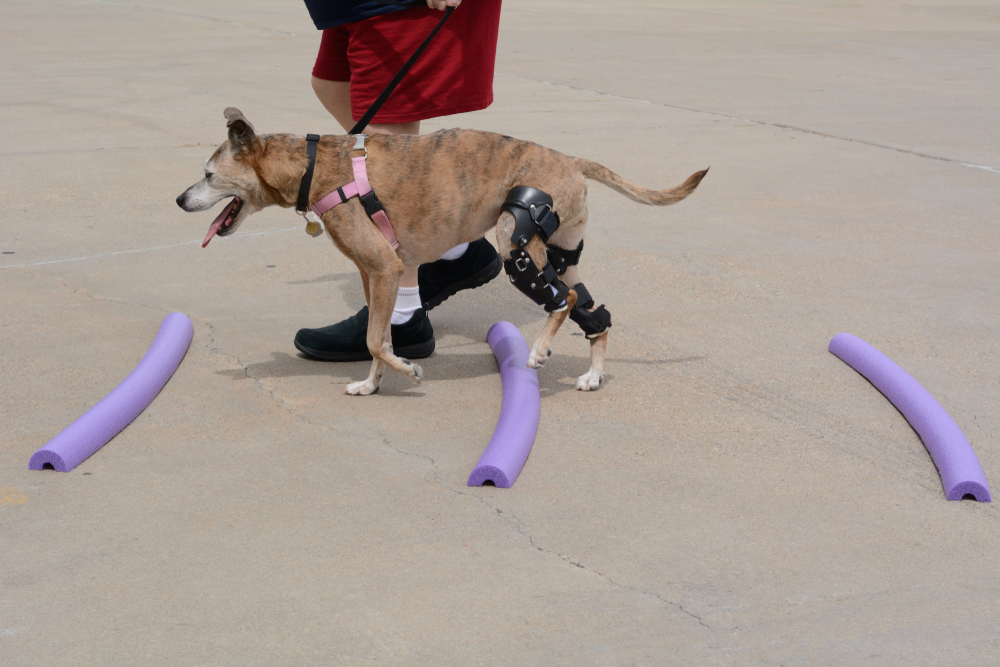
A bored dog is much more likely to jump, run, or overdo it. If you’re having trouble keeping your dog calm, let us know. We can suggest strategies that fit your dog’s personality and stage of recovery.
Protecting the Knee for Years to Come
As healing progresses and activity restrictions are lifted, it’s important to return to exercise gradually rather than all at once. Even after the knee has healed, a few simple habits can help protect both joints over the long term:
- Improve traction: Place runners or rugs over slippery hardwood and tile floors to reduce the risk of slipping.
- Limit high-impact activity: Avoid repetitive jumping, twisting, and explosive games until your veterinarian clears your dog to resume them.
- Increase exercise gradually: Build endurance over several weeks instead of trying to return to full activity immediately.
- Monitor for changes: Watch for new limping, stiffness, or reluctance to exercise, especially in the opposite leg.
Gentle warm-ups and cooldowns before and after exercise can also reduce stress on the joints. Just as importantly, maintaining a healthy body weight remains one of the best ways to protect both knees. Every extra pound increases the forces passing through the joints, while keeping dogs lean lowers the risk of arthritis progression and may help delay problems in the opposite leg. We can help you develop realistic nutrition and weight-management goals that support your dog’s long-term joint health.
Frequently Asked Questions About CCL Injuries in Dogs
How Much Does CCL Surgery Cost, and Is It Worth It?
The cost depends on the procedure, your dog’s size, and the surgical facility performing the operation, so we can give you the most accurate estimate after examining your dog’s knee. While surgery is a significant investment, stabilizing the joint usually provides better long-term comfort, improved mobility, and slower progression of arthritis. We’ll discuss the expected costs, benefits, and alternatives so you can make an informed decision.
Will My Dog Tear the Other CCL Too?
Possibly. Dogs that tear one cranial cruciate ligament have a significantly higher risk of tearing the ligament in the opposite knee because the same anatomy, body weight, and underlying degeneration often affect both joints. Keeping your dog lean, avoiding sudden spikes in activity, and having any new limp evaluated promptly can help protect the second knee.
How Long Until My Dog Is Back to Normal After Surgery?
Recovery varies with the type of surgery, your dog’s age, and how rehabilitation progresses, but most dogs begin using the leg comfortably within a few weeks and return to much more normal activity over the following months. The first couple of weeks are focused on strict activity restriction, after which exercise is increased gradually under veterinary guidance. Taking recovery slowly gives your dog the best chance for an excellent long-term outcome.
Keeping Your Dog Moving Comfortably for Years to Come
A torn CCL is one of the most common orthopedic problems we treat, but it doesn’t have to end an active, happy life. With an early diagnosis, an individualized treatment plan, and careful rehabilitation, most dogs return to comfortable walks, play, and everyday activities. Addressing the injury before arthritis and muscle loss become severe gives your dog the best opportunity for a strong recovery.
If your dog has started limping or you’re concerned about a painful knee, schedule an orthopedic evaluation with our Naples team. We’ll help you understand what’s causing the problem, discuss the treatment options that make the most sense for your dog, and guide you through every stage of recovery.


Leave A Comment