

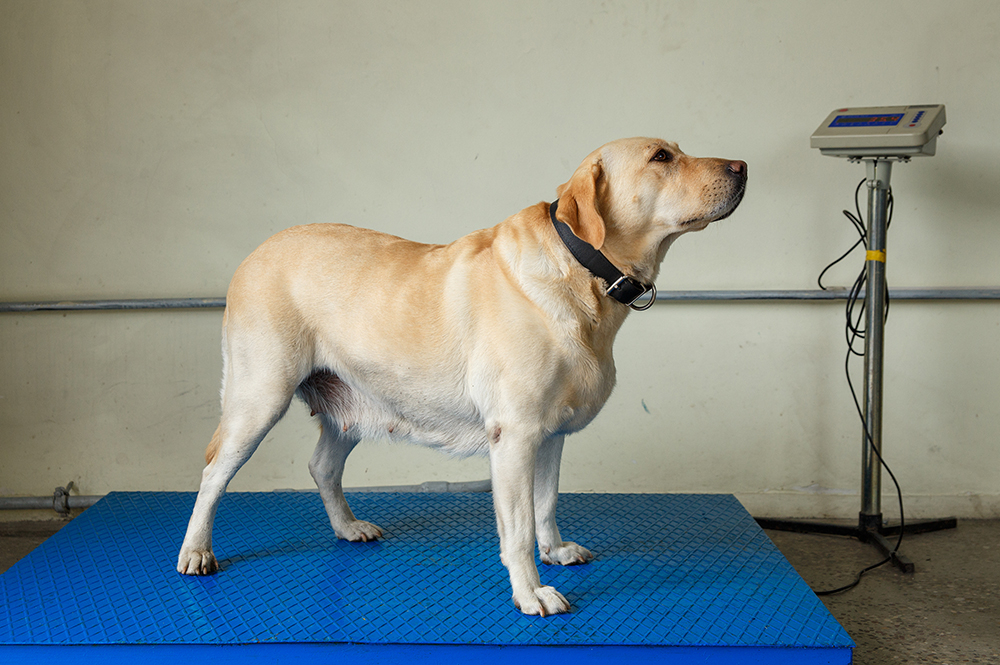
Weight can shift gradually enough that you genuinely stop noticing it, especially in pets who carry extra pounds gracefully or whose coats hide the changes. Body condition scoring is the method veterinarians use to get past that uncertainty: a nine-point scale tied to specific physical landmarks, including how easily the ribs can be felt, whether there is a visible waist tuck, and the fat coverage over the hips and spine. An ideal score sits at four or five; a pet scoring six or seven is carrying weight that adds stress to joints and organs over time, even when they seem perfectly happy day to day, while a pet below four may have a nutritional gap or underlying medical condition worth investigating. The scale makes a measurable conversation about weight possible rather than relying on impressions that are easy to second-guess.
At The Animal Medical Hospital of Naples, weight and nutrition are a central part of our veterinary wellness care because we know how much they shape your pet’s quality of life over the long term. We also know how hard it is to not give in to our pets asking for one more treat or an extra serving of dinner- our dogs give us the same sad eyes, and our cats also yell at us like they’ve never had a meal in their life. If you would like a wellness exam that includes a full body condition assessment and a plan you can actually follow, reach out to our team and we will take care of you both.
Body Condition Scoring at a Glance
- The scale tells only part of the story: body condition scoring measures fat and muscle together for a real picture.
- Most overweight pets do not look it: coats and build often mask the difference from their families.
- Small daily surpluses compound: a pet 10 to 15 percent over ideal has measurably higher rates of arthritis, diabetes, urinary stones, and cardiac strain.
- Cats must lose weight slowly: no more than 1 to 2 percent of body weight per week, to avoid hepatic lipidosis.
Why Is the Number on the Scale Not Enough?
The scale measures total mass, not what that mass is made of. Two dogs can weigh exactly the same while one is a lean, muscular athlete and the other carries significant fat with less muscle. Body condition scoring closes that gap by evaluating fat and muscle directly through hands-on assessment, with muscle health weighed alongside fat distribution.
A few principles are worth keeping in mind:
- Breed and build matter: a Greyhound at ideal weight looks starved by Labrador standards, while a Cocker Spaniel at ideal weight looks slender to people used to plumper companion dogs.
- Muscle is denser than fat: a well-conditioned dog often weighs more than expected because muscle adds pounds without the health risks of fat.
- Show looks are not always healthiest: some breed standards lean toward heavier conditioning than is ideal for long-term joint health.
- Daily function matters most: how easily a pet moves, jumps, and recovers from exertion tells you more than any single number.
The scale gives owners and veterinarians a shared language for these observations, and every preventive care visit at our practice includes a body condition assessment so trends surface before they become problems.
How Does Body Condition Scoring Work?
Body condition scoring works by assessing your pet from three angles and matching what you find to a nine-point body condition scoring scale. The three views take under a minute at home:
- From above: look down at the back while your pet stands, where an ideal pet shows a visible waist behind the ribs and an overweight pet looks straight-sided or bulging.
- From the side: at eye level, the belly should tuck up behind the ribs in an ideal pet, while an overweight pet has a level or sagging belly line.
- By touch: run your hands along the rib cage with light pressure, where you should feel ribs easily under a thin layer of fat, like feeling the back of your hand.
On the scale itself, a score of 1 to 3 is underweight, with ribs, spine, and hips easily visible and obvious muscle loss. A score of 4 to 5 is ideal, with ribs felt under light pressure, a visible waist from above, and a belly that tucks up from the side. A score of 6 to 7 is overweight, with ribs harder to feel and little or no waist. A score of 8 to 9 is obese, with ribs not palpable without firm pressure, no waist, and fat deposits over the hips, back, and belly. Check monthly using the three-angle approach and photograph in consistent lighting, since photos reveal changes that day-to-day observation misses.
What Does Being Overweight Actually Cost?
Being overweight costs in two directions at once: more spent on food and treats, and substantially more spent treating the diseases obesity drives. Owners want the best for their pets, and love often shows up as extra treats and another bite of dinner, but those calories add up to a real financial and medical bill.
The downstream costs include managing diabetes with daily insulin, monitoring, and rechecks, long-term arthritis care through medication, supplements, and sometimes surgery, and emergency interventions for back disease and other obesity-related conditions. Keeping a pet at a healthy weight saves real money and, more importantly, buys more quality time together. We approach these conversations without guilt or judgment, because the goal is a sustainable path forward rather than blame for what got us here.
What Are the Medical Risks of Excess Weight?
Excess weight strains nearly every body system, which is why body condition is treated as a vital sign rather than a cosmetic concern. The major risks include:
- Joint and back disease: each extra pound increases joint load disproportionately, and intervertebral disc disease risk rises sharply in long-backed breeds like Dachshunds, Corgis, and Bassets. Cruciate ligament injuries are more likely, hip dysplasia symptoms worsen, and arthritis happens faster in overweight pets.
- Urinary stones: overweight pets form stones at higher rates.
- Heart strain and high blood pressure: obesity contributes to systemic hypertension and added cardiac workload.
- Heart disease: an independent risk factor that accelerates pre-existing cardiac disease.
- Reduced heat tolerance: higher heat stroke risk, a real concern in the Naples heat and especially for flat-faced breeds.
- Anesthetic risk: higher complication rates and slower recoveries.
- Breathing difficulty: particularly in flat-faced breeds like Frenchies, Pugs, Bulldogs, and Persians.
- Shorter lifespan: research on obesity and lifespan consistently shows lean pets live longer, by years in some studies.
What About Pets That Are Too Thin?
Being too thin carries its own risks: weakened immunity, difficulty holding body temperature, muscle loss that limits mobility, slower healing, and fewer reserves for fighting chronic disease. A score below 4 deserves the same attention as a score above 5, with different interventions but the same goal of returning to healthy condition.
How Much Should You Feed Your Pet?
Feed to your pet’s ideal weight, not their current weight, since that single distinction is the most common feeding mistake. A 20-pound dog who should weigh 15 pounds needs the calories for a 15-pound dog. From there, portion guidelines help you get it right:
- Use a calorie calculator as a starting point.
- Measure with a scale rather than estimating, since cups vary widely and gram measurements remove the guesswork.
- Count every calorie, including treats, dental chews, training rewards, table scraps, and food used to give medication.
- Reassess every 2 to 4 weeks by body condition.
- Adjust in small increments of 5 to 10 percent up or down.
- Be patient with cats, since rapid loss can trigger hepatic lipidosis, so a 12-pound cat reaching 10 pounds should take three to six months.
Prescription or Over-the-Counter Weight Diet?
Not all weight management diets are equal, and the difference matters most for pets needing real reduction. When choosing pet food for weight loss, prescription weight-loss diets undergo feeding trials that demonstrate safe, consistent fat loss while preserving lean muscle, with specific protein-to-calorie ratios and engineered fiber content for weight loss that supports satiety. Over-the-counter “healthy weight” or “light” diets often reduce fat content without rigorous outcome testing and are not designed for meaningful loss. For pets needing to lose more than a few pounds or managing other conditions, prescription diets offer predictable results with veterinary oversight, and we help select the right one for your pet’s goals.
What Does Safe, Evidence-Based Weight Loss Look Like?
Safe weight loss is a marathon rather than a sprint, and lasting results come from a sustainable routine across exercise, feeding, rewards, and tracking.
- Exercise for dogs: daily structured walks of 20 to 30 minutes built up gradually, safe off-leash time, swimming for arthritic dogs, and fetch for younger ones.
- Exercise for cats: cat weight loss leans on interactive wand toys, laser play that ends with a catchable toy, and food puzzles, since cats do not walk on cue.
- Feeding routine: measured meals on a schedule rather than free feeding, plus interactive feeders or puzzle feeders that slow eating and add engagement.
- Rewards: low-calorie options like green beans, carrot, cucumber, or small amounts of plain cooked chicken, and kibble drawn from the daily allowance rather than added on top.
- Tracking: weekly weigh-ins during active loss, monthly photos and body condition scoring, and a portion adjustment if progress stalls for three to four weeks.
When Do Medical Issues Affect Weight?
Medical issues should be suspected whenever weight changes despite consistent feeding, or comes with shifts in appetite, thirst, or energy. Several conditions change appetite, metabolism, or activity:
- Dogs: hypothyroidism brings weight gain and lethargy, Cushing’s disease brings a pot-bellied look and increased thirst, and diabetes causes weight loss despite a big appetite.
- Cats: hyperthyroidism drives weight loss with a strong appetite, kidney disease causes loss with reduced appetite.
- Both: dental disease reduces eating from pain, arthritis lowers activity causing weight gain, and cancer causes unexplained weight loss.
Treating the underlying condition often makes healthy weight management possible again. Our in-house lab handles complete blood counts, chemistry panels, and urinalysis during your visit, so concerns are addressed promptly, and annual baseline screening catches subtle metabolic shifts before they cause visible changes.
The Pain-Weight-Pain Cycle in Senior Pets
Arthritis creates a cycle that traps many senior pets: joint pain reduces activity, decreased activity leads to weight gain, extra weight loads the painful joints further, and the worsening pain reduces activity even more. By the time families notice, the pet is heavier, stiffer, and less interested in moving than they were a year ago, and a “just eat less” weight loss plan often fails because the pet is too sore to use any calories they do consume.
Effective weight loss in these cases starts with effective pain control, which our team builds around careful observation of subtle pain signals and a layered plan that may include anti-inflammatories, laser therapy to reduce joint inflammation, and Platelet Rich Plasma injections for arthritis and joint disease. Once the pain is controlled, the pet starts moving again, weight comes off, and the joints take less load with every step. This is why pain management and weight management are really the same conversation for arthritic seniors, rather than two separate goals.
How Should Monitoring Change Through Life Stages?
Monitoring should change because caloric needs and body composition shift across a pet’s life, so what is right at two can overfeed at eight. A regular checkpoint keeps the plan current rather than reacting after weight has crept on.
| Life stage | What happens to weight | What to watch |
|---|---|---|
| Puppies and kittens | High growth demand | Over- or under-feeding |
| Young adults | Metabolism stabilizes, activity peaks | Easiest stage to maintain |
| Middle age | Metabolism slows, activity drops | A gradual creep upward |
| Seniors | Muscle loss can mask fat gain | Same weight, worse composition |
Wellness visits every six months give us a checkpoint to update portion recommendations, adjust diet choices, and refine activity targets. Our veterinary care builds this into the ongoing relationship rather than treating weight as an annual conversation.

Frequently Asked Questions About Pet Weight Management
My Pet Seems Happy and Active. Does It Really Matter If They Are a Little Heavy?
It matters more than most owners realize. Pets carrying extra weight feel the effects long before they show outward struggle, as joint loading, cardiac strain, and metabolic shifts happen quietly. Lean conditioning across a lifetime produces measurably better outcomes than correcting later, which is harder on both the pet and the family.
How Quickly Should My Overweight Pet Lose Weight?
Slow is the goal. Dogs and cats should lose no more than 1 to 2 percent of body weight per week. Faster loss in cats specifically can trigger hepatic lipidosis, a potentially fatal liver disease. A 12-pound cat reaching 10 pounds should expect three to six months, not weeks.
Can I Switch Food Cold Turkey?
Not safely. Sudden food changes cause GI upset and food refusal. Diet transitions should happen gradually over 7 to 10 days, starting at 75/25 old to new, then 50/50, then 25/75, then full new. For a pet with GI sensitivity, transition even more slowly.
My Pet Is Hungry All the Time. Are They Getting Enough?
Possibly, possibly not. Hunger can mean inadequate calories, low-satiety food, boredom, learned behavior, or a medical condition like diabetes or hyperthyroidism. If body condition is appropriate and the pet is otherwise healthy, the fix usually involves a higher-satiety food and a feeding strategy like smaller, more frequent meals or puzzle feeders rather than simply adding calories.
Are Some Breeds Harder to Keep at a Healthy Weight?
Several are. Labradors, Beagles, Cavaliers, Pugs, Dachshunds, Cocker Spaniels, and others have higher rates of obesity. These breeds need stricter calorie discipline than average, particularly because their food-motivated personalities make overfeeding easy.
Taking the First Step Toward a Healthier Weight
Better body condition translates to easier movement, fewer health risks, and more good years together. It can be hard to say no to a begging pet, and we will not pretend otherwise, but we will help with simple steps that fit your home and lifestyle and adjust the plan as we go.
If you would like a body condition assessment and a plan tailored to your specific pet, contact us and our team will set up a wellness visit. Our services include the nutrition counseling, dental care, and ongoing monitoring that make a real difference over time.


Leave A Comment