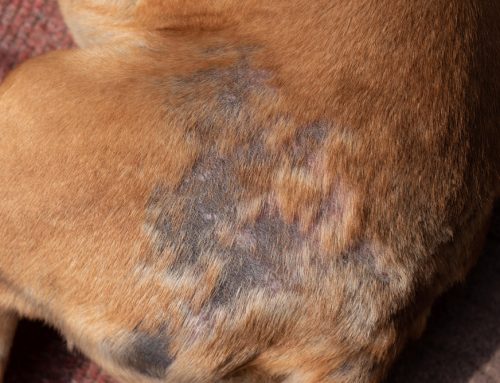


Most allergic reactions in pets show up on the skin: constant scratching, licking or chewing at the paws, red belly skin, head shaking, and ear infections that keep coming back. Faster reactions look different. Raised welts or a puffy muzzle within minutes of a sting or a vaccine need a same-day exam, and vomiting, collapse, pale gums, or labored breathing mean anaphylaxis, an emergency. What we do depends on which one you're seeing. Anaphylaxis gets epinephrine and hospital support right away, hives get medication to calm the swelling that day, and chronic allergies get a longer plan: clear the infections, stop the itch, then find and manage the trigger so the flares stop coming back.
Allergy treatment usually involves a few choices along the way, and those are easier to make with a veterinarian who will give you a straight opinion. At The Animal Medical Hospital of Naples, we tell you what we would do if your pet were our own. Southwest Florida has no real off-season for pollen, mold, or parasites, so we look for relief that holds through all twelve months and keep flea and tick prevention in the plan, since a single bite can undo weeks of progress. When you spend part of the year up north, we coordinate with your pet's other veterinarian so the plan works in both places. If your pet is still itching on the treatment you have now, come in and talk it through with us.
Sorting Itch, Hives, and Emergencies
- Chronic allergies bring years of itching and recurring ear and skin infections, and they call for a plan rather than a same-day scramble.
- Hives, a swollen muzzle, or a sting on the face need care that day, because a reaction that starts on the skin can move to the airway.
- Anaphylaxis is a true emergency that moves in minutes and needs epinephrine in a hospital, not an antihistamine from your cabinet.
- Allergies are controlled rather than cured, though testing, immunotherapy, and a strict diet trial can shrink the problem considerably.
Which Pets End Up With Allergies, and What Sets Them Off?
The pets who develop allergies usually declare themselves young. Most dogs and cats show their first signs between six months and three years old, and Retrievers, Bulldogs, Terriers, Shepherds, and their mixes are overrepresented. Any pet can react to a sting or a new drug, though, whatever their age or breed.
A puppy who chews their back feet raw, or a kitten scratching their ears in the second month home, isn't teething or being dramatic. That's early allergic skin disease, and catching it then beats finding it three infections later. Triggers sort into three groups:
- Environmental: Dust mites, mold, grass, and pollen set off atopic dermatitis, the itchy, inflammatory skin disease behind most of the year-round scratching we see in Naples pets, and the largest category by a wide margin.
- Food: One protein is usually the culprit, most often beef, chicken, dairy, egg, or fish, and since dinner has no season, the itch holds steady month after month. Ears and skin take the brunt, and some pets also have soft stool or occasional vomiting.
- Insects and stings: Flea saliva is the heavyweight. Bee and wasp stings, plus fire ants in Florida yards, cause the fast, dramatic reactions instead of the slow simmering ones.
Plenty of pets carry two or three at once. A pollen-allergic cat looks identical to a food-allergic one, and guessing from the outside rarely works.
Could My Pet React to a Vaccine or a New Medication?
Your pet can react to a vaccine or a new medication, though serious reactions are uncommon. Most vaccination reactions amount to a tender injection site, a quieter evening, and a smaller appetite that settle on their own within about 48 hours. Facial or muzzle swelling, hives, vomiting, or labored breathing in the hours after a visit is the version that needs a phone call and an exam.
Medications deserve the same attention: antibiotics, anti-inflammatories, sulfa drugs, topical products, even a flavored chew can provoke itching, swelling, or sudden lethargy, and that can happen on the fifth dose as easily as the first.
Tell us about any past reaction before vaccines are given or a new prescription gets filled, even if it happened years ago at another hospital. That history comes up again at wellness exams, where we can spread shots across separate visits, pretreat beforehand, or drop one your pet's lifestyle doesn't call for.
How Do I Know If This Is an Emergency?
An allergic reaction is an emergency when it moves fast and reaches beyond the skin. Weakness, collapse, vomiting with sudden lethargy, pale or bluish gums, or labored or open-mouth breathing mean go to a hospital now. Welts and facial swelling need a same-day exam, while itching and recurring skin or ear infections can wait for a scheduled visit.
| What you're seeing | How fast to act |
| Weakness or collapse with vomiting, gums gone pale or blue, a cat breathing open-mouthed | Emergency, go now |
| Welts, a swollen muzzle or eyelids, a sting on a leg or paw, a cough that just started | Same-day exam |
| Itching, licking, scooting, ears or skin infected again | Schedule an exam this week |
On the drive, note when it started and what your pet was doing, bring the packaging or a photo of the plant or insect, and watch the breathing. Healthy gums are a clean, even pink, and pale or bluish gums mean oxygen has stopped reaching tissue and the reaction has gone systemic. Call us on the way so we're ready when you pull up.
What Not To Do When You See an Allergic Reaction
Some home responses make things worse. Skip any human allergy tablet that also carries a decongestant or a fever reducer. Don't make your pet vomit, and never share your own pain relievers, which can cause stomach ulcers and kidney damage in dogs and are deadly to cats. Ask us for a dose before you give anything at all, including plain diphenhydramine. When a reaction starts after we've closed, the nearest 24-hour veterinary emergency hospital is the right destination.
What Happens When a Reaction Becomes Anaphylaxis?
When a reaction becomes anaphylaxis, the whole body is involved at once, and it moves in minutes. Anaphylaxis in dogs announces itself through the gut: a dog stung or injected vomits, has diarrhea, goes weak, and goes down. Families read that as food poisoning while the clock runs.
In cats the lungs take the hit instead. Open-mouth breathing in a cat is never normal, and paired with drooling, a low crouch, or sudden weakness, it means go now.
What treatment looks like in the first minutes
Epinephrine comes first, since it reverses the cascade rather than softening it. An IV catheter and fluids hold blood pressure up, oxygen supports the lungs, and antihistamines and corticosteroids support the effort, with heart rhythm, blood pressure, and breathing watched continuously rather than spot-checked.
Anywhere from a few hours to a full day later, a second wave can arrive without any new exposure, which is why a patient who looks fine after 60 minutes still needs observation. If that window runs past our closing time, we'll arrange a transfer to a 24-hour facility so nobody goes home unwatched. For the handful of pets who have already survived severe anaphylaxis, ask us whether an epinephrine auto-injector belongs at home.
What Does Chronic Allergic Skin Disease Look Like?
Chronic allergy shows up as licking, chewing, head shaking, face rubbing, and scooting that build slowly and flare with the seasons. Dogs go after their feet, belly, and ears; cats groom in private, so thinning fur gets noticed before anyone sees the behavior. Secondary infections follow, and those are what usually bring families in.
In dogs
Feet are the classic location. Pododermatitis, the red, swollen, rust-stained skin between the toes, comes from relentless licking. A dog who chews one patch raw can produce hot spots within a day, a warm, oozing area of infected skin that spreads under the coat faster than the hair loss suggests. Ears run a close second: an otitis externa that responds to drops and returns two months later is an allergy in the ear canal, not an ear problem. Sarcoptic mange itches just as hard, spreads to other pets and to people, and needs a skin scraping to rule out.
In cats
Three patterns cover most of it. Symmetrical hair loss along the belly, inner thighs, and forelegs comes from overgrooming. Miliary dermatitis scatters tiny crusty bumps down the back and neck that feel like grit under your palm. Firm raised sores on the lips, chin, belly, or the back of a thigh are eosinophilic granuloma complex, which gets mistaken for a bite wound or a burn.
How Do We Get the Itching Under Control?
Getting the itching under control takes layers rather than one drug. We clear the infection sitting on top, shut the itch down fast so damaged skin can heal, then treat the underlying allergy so those infections stop returning. One medication rarely holds the line alone.
Clearing what's on top
Yeast, bacteria, and a mix of the two all produce the same brown gunk in an allergic ear, so ear cytology is what separates them and decides which medication actually clears the infection. A slide from an angry hotspot answers the same question for skin.
Medicated shampoos, sprays, and wipes
Used consistently, a medicated shampoo, spray, mousse, or wipe controls symptoms well enough that many pets need less oral medication. Between baths, sprays and wipes handle the trouble spots: paws and the webbing between the toes, the folds around the face, and ears on a regular cleaning schedule. Whether yeast, bacteria, or a damaged barrier is driving things decides which product to use, and our veterinary team matches it to the skin in front of us.
Prescription medications
Choosing among these comes down to trade-offs your household can live with. Some quiet the itching within days but need to be given for life, others take weeks to build steady control, and cost varies as widely as what your pet will actually tolerate, whether that's a daily pill or an injection. Most pets cycle through more than one as flares rise and fall, and the first plan is usually a starting point rather than a final answer.
| Option | What it does | Where it fits |
| Cytopoint | Antibody that neutralizes one itch protein | Dogs only, injection every four to eight weeks |
| JAK inhibitors (Apoquel, Zenrelia, and Numelvi) | Shut off the itch signal | Dogs only, daily pill for quick relief in a flare and steady use over longer stretches |
| Atopica (cyclosporine) | Dials down the immune response driving the allergy | Dogs and cats, slow to start, steady long-term control |
| Antihistamines | Block histamine | Help a subset of pets, usually alongside something else |
| Corticosteroids | Broad anti-inflammatory | Dogs and cats, short courses for acute flares |
Cats have fewer approved options than dogs, so a cat's plan leans more on cyclosporine, steroids, strict flea control, and a diet trial.
What Can I Do at Home Between Visits?
What you do at home carries more of this than families expect. Lowering the total load on your pet's skin often means less medication, not more.
Parasite prevention isn't optional
In a pet with flea allergy dermatitis, one bite buys two to three weeks of scratching long after the flea itself is gone, which is why a single skipped dose in our climate undoes months of progress. Pets whose main problem is pollen still get noticeably worse once fleas enter the house. We keep flea and tick preventives going all twelve months for every allergic patient, indoor cats included.
The rest of the routine
- Wipe after outdoor time: Pollen settles on the coat, then absorbs through skin or gets licked off paws. A damp cloth over feet, face, and belly removes a real share of it.
- Bathe and brush on a schedule: Brushing lifts allergens off the coat, and a medicated bath needs the lather to sit at least 10 minutes before the rinse.
- Manage the indoor air: HEPA filtration plus weekly hot-water laundering of bedding cuts dust mite and pollen exposure right where your pet sleeps.
- Omega fatty acids: Long-term supplementation supports the skin barrier and lowers inflammation. It works slowly, so give it a couple of months before judging it.
Can We End an Allergy for Good?
We can't end an allergy for good, because the immune system rarely unlearns a trigger completely. Two routes still change the picture: immunotherapy for what your pet breathes, which can make many pets far less itchy, and an elimination diet trial for what your pet eats, which tells you exactly what to keep out of the bowl.
Testing, then retraining the response
Environmental allergies are diagnosed by ruling out look-alikes such as fleas, mites, and food, not by a test. Testing comes afterward, to choose what goes into immunotherapy, and identifying specific triggers takes either intradermal skin testing, performed by a veterinary dermatologist we'll coordinate the referral with, or serum testing from a blood sample. Once real triggers are known, immunotherapy gradually retrains the immune response, given as drops under the tongue at home or as injections. It works slowly, often taking 6 to 12 months to show its full effect, and usually continues long term, but up to 80% of patients end up meaningfully less itchy. A full allergy workup begins with an exam, cytology, and clearing parasites off the list first, since a flea-allergic dog will test positive for plenty of pollens too.
Proving that food is the problem
No blood test reliably diagnoses a food allergy. An elimination diet trial is the only proof: 8 to 12 weeks on a single hydrolyzed or novel protein, nothing else crossing your pet's lips, no flavored chews and no table scraps, then a planned reintroduction to confirm which protein caused the trouble. Hydrolyzed diets chop the protein into pieces the immune system can no longer identify; novel means something your pet has never eaten, like rabbit or venison. Over-the-counter limited-ingredient bags don't hold up here, since shared manufacturing lines leave traces of other proteins behind, enough to keep an allergic pet itchy and the results meaningless.
The Questions We Hear Most About Pet Allergies
Is an over-the-counter antihistamine safe for welts?
Benadryl is safe for plenty of dogs with mild welts, though the dose depends on weight and on what else your dog takes. Call us before you open the bottle. Never use a combination product: the decongestant or pain reliever in those tablets is toxic to dogs and cats. Antihistamines also don't stop anaphylaxis, so if swelling is spreading or breathing has changed, the medicine cabinet isn't the answer and a hospital is.
My cat's fur is thinning in patches. Is that allergies?
Allergic overgrooming is a common cause, but ringworm, mites, fleas, thyroid disease, and pain from arthritis or a bladder problem all produce the same look. An exam plus a skin scraping, cytology, and sometimes bloodwork sorts it out quickly, which matters because those treatments have nothing in common.
Will grain-free food fix the itching?
Grain-free food rarely fixes the itching. Grain allergy is uncommon; when food is the trigger a protein is almost always behind it, and the same chicken in a grain-free bag changes nothing. Store-bought diets also aren't dependable enough to diagnose anything, and there are unresolved questions about grain-free formulas and heart disease in dogs, which is one more reason to talk it through before you change the bowl.
Getting to the Cause of Your Pet's Itching
Spotting an allergic reaction early, whether it's welts after a sting or a dog who won't stop licking his paws, is what keeps it from becoming an emergency or a years-long cycle. Treating one infection at a time keeps your pet comfortable for a few weeks at a stretch and never gets ahead of the problem. Getting at the cause, whether that's pollen, a protein, or fleas, is what breaks the cycle, and pets whose allergies are well managed stop living flare to flare. Reaching that point usually takes a few adjustments, which is normal. Book a visit at The Animal Medical Hospital of Naples and bring your questions.